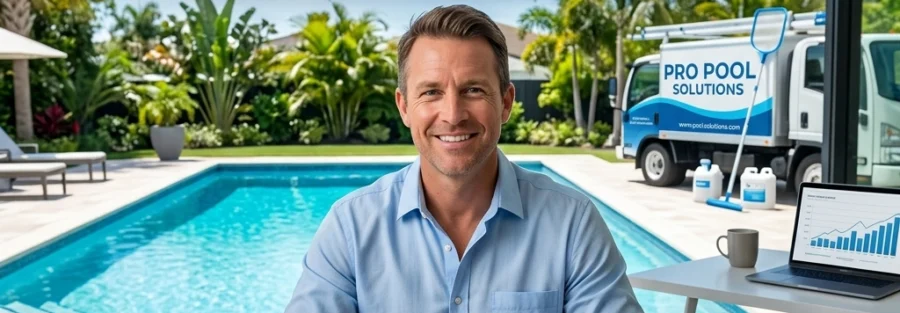
Are you ready to hang up the net and trade the smell of chlorine for the scent of a well-earned retirement? Or maybe you’re looking to liquidate your current assets to dive into a new, larger venture? Whatever your reason, if the thought "I need to sell my pool route" has been circling your mind like a robotic pool cleaner, you’ve come to the right place.
I’m Arif Sealey, CEO of Sealey Business Brokers, and I’ve seen it all in this industry. Most people will tell you that selling a business takes years of meticulous planning. While a long runway is great, sometimes life moves faster than a salt-water conversion. You need results, and you need them now. We’ve designed this "Seller-Saturate" guide to show you how to condense the process into a high-intensity 30-day sprint without leaving money on the table.
Selling a pool route isn't just about handing over a list of addresses; it’s about transferring a lifestyle, a legacy, and a lucrative stream of recurring revenue. Let’s dive in and navigate these waters together.
Phase 1: The Deep Clean (Days 1–10)
Before you can make a splash in the market, you have to ensure your "pool" is crystal clear. No buyer wants to jump into a route with murky financials or leaky customer retention.
1. The Financial Scrub
Your pool route valuation hinges almost entirely on your recurring monthly revenue (RMR). In the first ten days, you need to pull every bank statement, invoice, and P&L sheet from the last 12 months.
Buyers look for "clean" water. This means:
- Separating your personal expenses from the business.
- Clearly identifying "reoccurring service" income vs. "repair" income.
- Ensuring your billing is up to date. If you have customers who are 90 days behind, they aren't an asset; they’re a liability.
2. Digital Organization
In today’s market, a handwritten notebook doesn't cut it. To command a premium price, you need to show that your route is organized. If you aren't already using industry software, spend this week migrating your customer data (gate codes, dog names, chemical preferences) into a clean digital format. A tech-forward route is a high-value route.

3. Understanding Your Multiples
What is your route actually worth? Generally, pool routes sell for a multiple of their monthly billing: typically between 6 to 12 times the gross monthly service income. However, a "strategic positioning" can push you to the higher end of that bracket. If your route is dense (meaning less drive time and lower gas costs), your valuation climbs. This is where a professional pool route broker becomes your greatest ally, helping you find those hidden "value-adds" that the average seller misses.
Phase 2: Making a Splash (Days 11–20)
Once your ducks: or should I say, your floating loungers: are in a row, it’s time to go to market. This is the "Saturate" part of our campaign.
1. Crafting the "Hook"
To sell my pool route quickly, your listing needs to be more than just a "Business for Sale" sign. It needs to tell a story of a resilient, recession-proof investment. Use sensory imagery: describe the shimmering blue water and the sun-soaked freedom of the job. But back it up with hard facts: "95% customer retention rate," "20-mile radius density," or "fully equipped truck included."
2. Finding the Right Buyer
Where do you find buyers? You could post on Craigslist, but you’ll likely spend more time dodging "tire-kickers" than talking to serious investors.
- The DIY Route: Marketplaces like BizBuySell can work, but they require you to vet every inquiry yourself.
- The Broker Route: Working with a specialized pool route broker like Sealey Business Brokers means we tap into a pre-vetted list of hungry buyers who are ready to close. We handle the "weeding out" process so you only talk to the winners.
3. The Art of the Vetting Process
Don't let just anyone peek under the hood of your business. Before sharing your route maps or specific customer names, ensure every potential buyer has signed a Non-Disclosure Agreement (NDA) and provided Proof of Funds. You don't want to leak sensitive data only for the buyer to disappear into the deep end.

Phase 3: Anchoring the Deal (Days 21–30)
The final ten days are about the "linchpin" moments: the negotiation, the contract, and the transition.
1. Mastering the Negotiation
Expect buyers to test the pH levels of your deal. They might try to negotiate 10-20% off your asking price. To stay firm, point back to your density and your equipment quality. A common "safety net" for buyers is the holdback. Typically, 20-30% of the sale price is held in escrow for 60-90 days to ensure the customers actually stay with the new owner. Accept this as a standard industry practice: it shows you’re confident in the loyalty of your clients.
2. Legal Tips & The Sales Agreement
Don't take the plunge without a solid contract. Your sales agreement must include:
- A Non-Compete Clause: Usually 2-5 years and a specific radius. This gives the buyer peace of mind that you won't start a new route across the street next month.
- Bill of Sale: For any trucks or equipment included.
- Training Period: Promise at least 2-4 weeks of ride-along training to ensure a smooth handoff.
3. The Graceful Exit
Success in the pool industry is built on relationships. In the final days, draft a professional introduction letter to your customers. Frame the change as an "expansion" or an "upgrade." Introduce the new owner as someone you personally selected to maintain the high standards they’ve come to expect. This ensures the "transferable asset" remains intact long after you've cashed the check.

Why Speed Matters (and Why It Doesn't)
You might be thinking, "Arif, is 30 days really enough?" In a hot market, absolutely. But speed shouldn't mean sloppiness. By following this high-intensity framework, you are essentially doing 12 months of preparation in a compressed timeline.
The "Seller-Saturate" campaign is about creating an environment where buyers feel they might miss out on a "lucrative" and "rewarding" opportunity if they don't act fast. It turns the tables in your favor.
Common Pitfalls to Avoid
Even the best swimmers can get a cramp if they aren't careful. When you're trying to sell my pool route, watch out for these:
- Overvaluing Equipment: Buyers care about the accounts, not your five-year-old power washer. Value the route based on revenue, and treat the equipment as a "sweetener."
- Hiding the "Ugly" Pools: Every route has that one customer who is a nightmare. Be honest. Total transparency builds trust and prevents the deal from falling through during due diligence.
- Neglecting the "Seasonality": Selling in the spring or early summer is often easier as buyers want to capture the "green-to-clean" repair revenue. However, with the right positioning, a route is a "solid investment" any time of year.
Your Next Stepping Stone
Selling your business is a journey, a transition from one chapter of your life to the next. It’s about anchoring your financial future and ensuring your hard work continues to grow under new ownership.
If you’re feeling overwhelmed by the paperwork or the thought of "navigating uncharted waters" alone, we’re here to help. At Sealey Business Brokers, we specialize in making these transitions seamless. We don't just list businesses; we curate deals that benefit both the seller and the buyer.
Ready to see what your route is worth? Check out our blog for more tips, or read our testimonials to see how we’ve helped owners just like you make a successful exit.
Don't let your hard-earned equity sit stagnant. Take the plunge, follow the 30-day guide, and let’s get your route sold for the price it deserves.
Summary of the 30-Day Sprint:
- Days 1-10: Clean financials, digitize records, and get a professional pool route valuation.
- Days 11-20: Create a compelling listing and vet buyers through a specialized pool route broker.
- Days 21-30: Negotiate terms, sign the non-compete, and execute a professional customer handoff.
Your future is waiting: let’s make sure it’s a refreshing one. Reach out to Sealey Business Brokers today and let’s get to work!