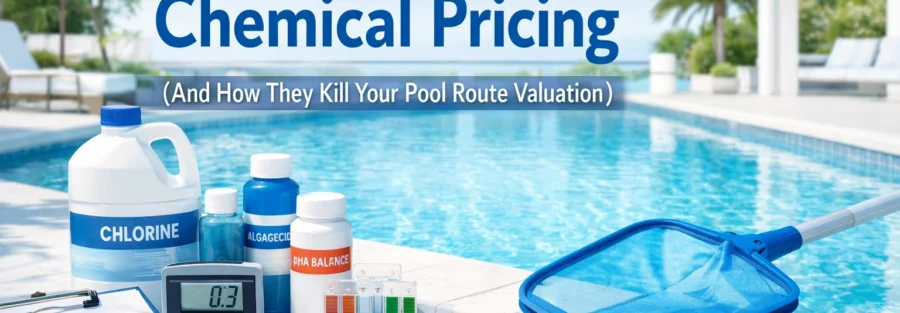
Are you working harder than ever, only to find that your bank account isn’t reflecting the "shimmering water" of your success? Does it feel like you’re treading water just to keep up with the rising costs of chlorine, acid, and shock?
If you’ve ever thought about what it would take to eventually sell my pool route, you need to look closely at your chemical pricing. In the world of pool service, chemicals are often the "linchpin" of your profitability. If you aren't pricing them correctly, you aren't just losing a few dollars per stop: you are systematically devaluing your entire business.
At Sealey Business Brokers, we see it every day. A route owner has a "sun-soaked tapestry" of loyal clients, but their margins are being eaten alive by a pricing model that hasn't changed since the 90s. If you want to transform your business into a "lucrative" investment that a buyer will fight over, it’s time to stop making these seven common mistakes.
1. The "One-Size-Fits-All" Flat Rate Trap
The biggest mistake we see is the "all-inclusive" flat rate. You charge $150 a month regardless of whether the pool is 10,000 gallons or 40,000 gallons. While this sounds simple for billing, it’s a anchor dragging down your enterprise.
Larger pools require significantly more chemicals to reach the same saturation levels. When you bid an account without factoring in pool volume, you’re essentially giving away your profit to the owners of larger pools. For a pool route broker, seeing a high percentage of large pools on a flat-rate plan is a major red flag that signals "low margins."
The Solution: Transition to a "Chemical-Plus" model or tiered flat rates based on gallonage. This ensures that every drop of liquid gold you pour into that water is accounted for.
2. Ignoring "Problem" Site Conditions
Every pool technician knows that no two backyards are the same. A pool surrounded by a "sun-soaked tapestry" of shedding oak trees or a yard with three golden retrievers who love to swim is going to devour chemicals at double the rate of a screened-in lap pool.
If you are bidding these "problem" pools at your standard rate, you are operating at a loss from day one. Failing to factor in heavy debris, old equipment, or lack of automatic cleaners means your chemical costs will skyrocket while your revenue stays stagnant.

3. Shopping Like a Homeowner (Retail Pricing)
In our recent research, we’ve found that chemical costs can run as high as 120% of revenue in poorly managed operations. This happens most often when route owners are buying chemicals at retail prices or from local big-box stores.
If you are buying a couple of jugs of acid here and a bucket of tabs there, you are missing out on the power of bulk negotiation. To maintain a resilient profit margin, you must standardize your procurement.
Strategic Tip: Lock in annual contracts with wholesalers. By standardizing your SKU list and buying in bulk, you can often see a 2-point improvement in your overall margin. When it comes time to acquire more accounts or sell your own, those two points translate to thousands of dollars in valuation.
4. Letting Your Technicians Play "Wild West" with Sourcing
If you have employees, are you allowing them to buy chemicals ad hoc? Without a centralized purchasing system, you lose all negotiating leverage. Even worse, you lose track of where your inventory is going.
Inconsistent chemical application isn't just bad for the water; it’s bad for the books. When technicians aren't following a standardized chemical protocol, your costs become unpredictable. Unpredictability is the enemy of a high valuation. A buyer wants to see a "solid investment" with predictable overhead, not a guessing game.
5. Stagnant Pricing in an Inflated Market
The pool industry has seen massive shifts in chemical costs over the last few years. If you haven't raised your prices to reflect the inflation of chlorine and equipment, you are effectively taking a pay cut every single month.
Many owners are afraid to raise prices because they fear losing clients. However, most clients understand that the price of doing business goes up. If you don't adjust, your "rewarding" business will quickly become a burden. A professional pool route broker will tell you that a route with outdated pricing is much harder to sell because the new owner will have to immediately perform "damage control" by raising everyone's rates.
6. The "Short-Cut" Syndrome (Skipping Treatments)
It might be tempting to skip a shock treatment or hold back on tabs when the budget is tight. This is a classic example of "stepping stones" leading you in the wrong direction.
Skipping preventative treatments almost always leads to algae blooms. Remediating an algae-infested pool costs far more in chemicals and labor than the preventative maintenance ever would. Beyond the immediate cost, inconsistent water quality damages your reputation. When you decide to sell my pool route, your reputation for "crystal clear" water is a tangible asset.
7. Failing to Use a "Chemical-Plus" Model
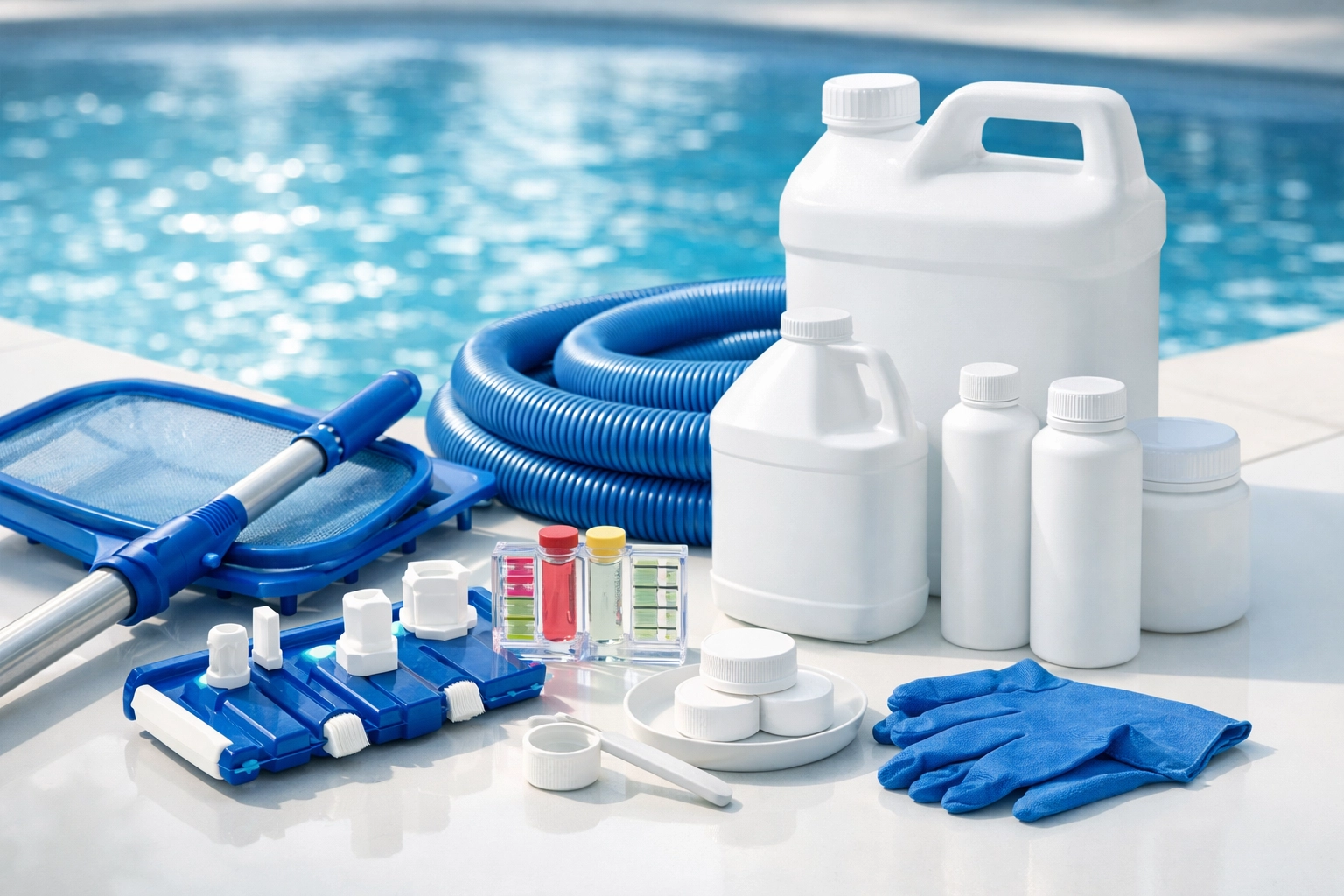
This is the single most important adjustment you can make. A "Chemical-Plus" model means you charge a base service fee plus the actual cost of the chemicals used.
Why Buyers Love It:
- Transparency: Buyers can see exactly where the money is going.
- Margin Protection: If chemical prices spike again, the cost is passed through to the customer, protecting your bottom line.
- Scalability: It’s much easier to manage a large team when the billing is tied directly to usage.
When we evaluate a business at Sealey Business Brokers, routes that utilize a Chemical-Plus model or a transparent "chemical surcharge" consistently command higher multiples. It shows the buyer that the owner is a "strategic" operator who understands how to anchor their enterprise against market volatility.
How Pricing Kills Your Valuation
You might be thinking, "Arif, I'm making enough to pay the bills, so why does this matter?"
It matters because pool routes are typically valued at a multiple of their Monthly Recurring Revenue (MRR) or a multiple of their Seller's Discretionary Earnings (SDE).
If your chemical costs are 30% of your revenue because of poor pricing, but they should be 15%, you are losing 15% of your profit every month. When you go to sell, that 15% loss is multiplied. If routes in your area are selling at a 12x multiple, every $1,000 in monthly "wasted" chemical cost is actually $12,000 out of your pocket at the closing table.

Taking the Plunge: Transitioning Your Pricing
Making the switch to better pricing doesn't have to be a "uncharted waters" nightmare. Start by auditing your top 10 most expensive pools. Compare what they pay to what you spend on them. You’ll likely find that your "favorite" long-term clients are actually your least profitable.
Use professional, pragmatic language when communicating changes to your clients. Explain that in order to maintain the high standards of a "shimmering pool" and protect their equipment, you are moving to a more transparent billing structure.
Conclusion: Anchoring Your Future
Your pool route is more than just a job; it’s a "lucrative" asset that you’ve built with sweat and sun. Don't let poor chemical pricing act as a "slow leak" in your financial pool. By addressing these seven mistakes, you’ll increase your monthly cash flow today and maximize your payout when you’re ready to "take the plunge" into retirement or your next venture.
If you’re wondering what your route is currently worth or how you can optimize it for a future sale, we’re here to help you navigate these waters. Whether you’re looking to buy or sell, the right strategy makes all the difference.
Ready to see how your route stacks up? Let’s make a splash and get your pricing right. Visit Sealey Business Brokers to learn more about how we help pool pros turn their hard work into a resilient legacy.