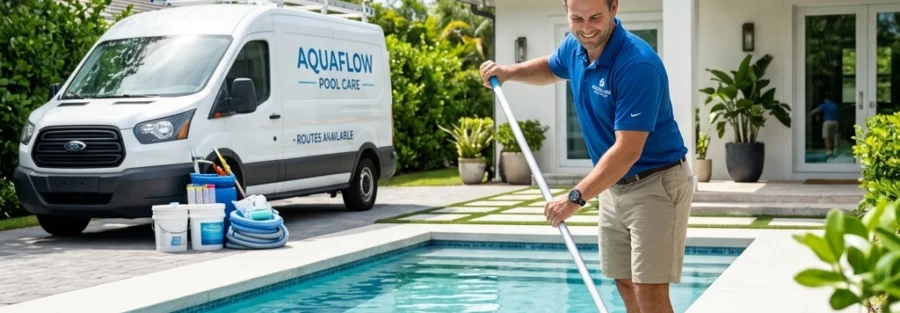
Are you ready to trade your skimmer for a suitcase? Does the idea of hanging up the test kit and stepping into a new chapter of your life sound like the ultimate "refresh"?
For many pool professionals, the business is a labor of love: a sun-soaked tapestry of early mornings and shimmering blue waters. But as any seasoned pro knows, there comes a time when you want to reap the rewards of those years of hard work. As we kick off our Seller-Saturate series here at Sealey Business Brokers, we want to ensure you aren't just "testing the waters" but are diving in with a strategy that maximizes your return.
Selling a business is often seen as a daunting, uncharted sea. However, learning how to sell a pool route doesn't have to be a high-pressure dive into the unknown. If you are a busy owner looking for a streamlined, lucrative exit, this guide is your roadmap to a successful transition.
Step 1: Gauge the Depth (Accurate Valuation)
Before you can make a splash in the market, you need to know exactly how deep your "pool" is. In the world of business brokerage, valuation is the linchpin of a successful sale. You’ve put in the hours, but what is that sweat equity actually worth in today’s resilient market?
Typically, pool routes are valued based on a multiple of their gross monthly service revenue. In the current 2026 landscape, we generally see routes selling for anywhere between 6 to 12 months of gross monthly income.
Wait, why such a wide range?
The "strategic positioning" of your route determines where you land on that scale. Factors that drive your value higher include:
- Route Density: Are your stops within a tight one-mile radius, or are you spending half your day burning gas between zip codes?
- Account Quality: Do you have long-term residential contracts, or is your roster a revolving door of seasonal one-offs?
- Billing Rates: Are you charging 2020 prices in a 2026 economy? High-margin routes always command a premium.
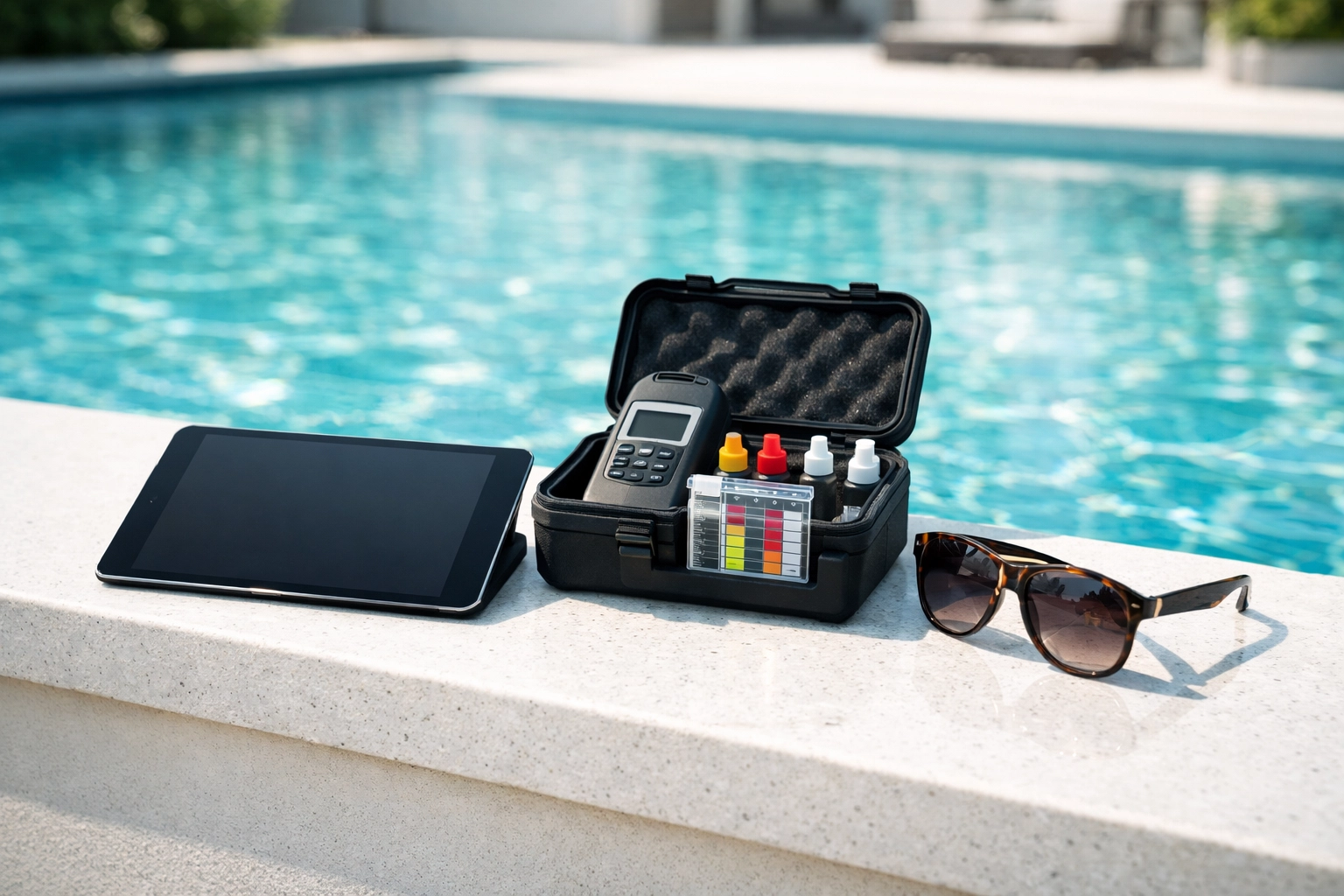
By securing a professional valuation from an expert who understands the nuances of the pool industry, you ensure you aren't leaving money on the table. At Sealey Business Brokers, we look at the last 24 months of closed deals to give you a figure that is grounded in reality, not just wishful thinking.
Step 2: Clear the Debris (Organize Your Documentation)
Transparency is the currency of trust. If a buyer feels like they are "navigating uncharted waters" with your financials, they will swim away. For a busy owner, this is often the most tedious step, but it is the most vital for a smooth transition.
When considering how to sell a pool route, your "books" are just as important as your "buckets." Buyers are looking for a clear picture of the Owner’s Benefit. This includes your net income plus any "add-backs" (like your personal vehicle, cell phone, or health insurance that the business covers).
You should have the following ready to go:
- Profit and Loss (P&L) Statements: For at least the last two fiscal years.
- Customer Roster: A clean list including service days, rates, and how long they’ve been with you.
- Payment Histories: Proof that your customers actually pay on time.
- Inventory Lists: Any equipment, chemicals, or vehicles included in the sale.
Think of this step as clearing the algae before a big party. You want your business to look pristine under the microscope. For more insights on how we help owners present their data, check out our service category sitemap.
Step 3: Maintain the Current (Don’t Let the Business Slide)
A common mistake busy owners make once they decide to sell is "checking out" mentally. They stop raising rates, they let the chemical logs slide, and they stop pursuing new leads.
This is a mistake that can sink your sale price.
To keep your business a "solid investment," you must continue to run it as if you’re keeping it for the next ten years. In fact, if you haven’t raised your rates in the last twelve months, now might be the time to do it. A buyer would much rather step into a route with modern, competitive pricing than have to be the "bad guy" who raises rates immediately after taking over.
Keep your geographic density tight. If you have outliers that are costing you too much in windshield time, consider pruning them now. A lean, mean, profitable machine is far more attractive than a sprawling, inefficient one. Maintaining your "strategic positioning" ensures that when the right buyer comes along, the business is a turnkey opportunity they can’t pass up.

Step 4: Be a Flexible Diver (Offer Creative Options)
In the pool route world, one size rarely fits all. You might have a massive route with 150 stops, but your most qualified buyer might only have the capital or the "bandwidth" for 50.
One of the secrets to a fast sale is flexibility. By being open to "splitting the route," you effectively double or triple your buyer pool.
- Partial Sales: Selling off a specific territory while keeping the rest can provide a quick cash infusion.
- Seller Financing: In some cases, carrying a small portion of the note can make the deal more accessible to a hungry entrepreneur who is just a little short on cash.
- Consulting Periods: Offering to stay on as a consultant for a few weeks after the sale adds an immense layer of security for the buyer.
Flexibility shows you are confident in the "resilient" nature of your business. It turns a rigid transaction into a collaborative partnership.
Step 5: The Warm Handoff (The Smooth Transition)
The final "stepping stone" in your journey is the transition period. The biggest fear every buyer has is "customer churn." They are worried that the moment the "old guy" leaves, the customers will cancel.
To prevent this, you need a plan for a warm handoff. This usually involves:
- The Guarantee Period: Most sales include a 90-day guarantee where you agree to replace an account if they cancel for reasons other than the new owner’s performance.
- In-Person Introductions: For high-value or long-term clients, a quick face-to-face introduction goes a long way.
- Hands-on Training: Spend 2-4 weeks showing the new owner the "quirks" of each pool. Every backyard is different, and sharing those "secrets" ensures the buyer's success: and your payout.
We’ve seen this work time and time again. Just look at the success stories from people like Ruth or Clint, who navigated these transitions perfectly. A smooth handoff preserves the legacy you built and ensures the "shimmering water" stays clear for the next owner.

Ready to Take the Plunge?
Selling your pool route is more than just a financial transaction; it’s the culmination of your dedication to your craft. Whether you are looking to retire, start a new venture, or simply take a well-deserved break, following these five steps will ensure you exit with your head held high and your pockets full.
As part of our Seller-Saturate series, we are dedicated to helping busy owners like you navigate these waters with ease. You don't have to do this alone. If you're wondering what your route might be worth in today’s market, or if you just want to talk shop about the best time to list, we’re here to help.
Don’t let your hard work evaporate. How to sell a pool route is a question of strategy, timing, and professional guidance. Are you ready to see what's on the other side of the fence?
For more information on our process and to see how we’ve helped others achieve their entrepreneurial dreams, feel free to explore our full sitemap or read more about our recent case studies.
The water is perfect. It's time to dive in.